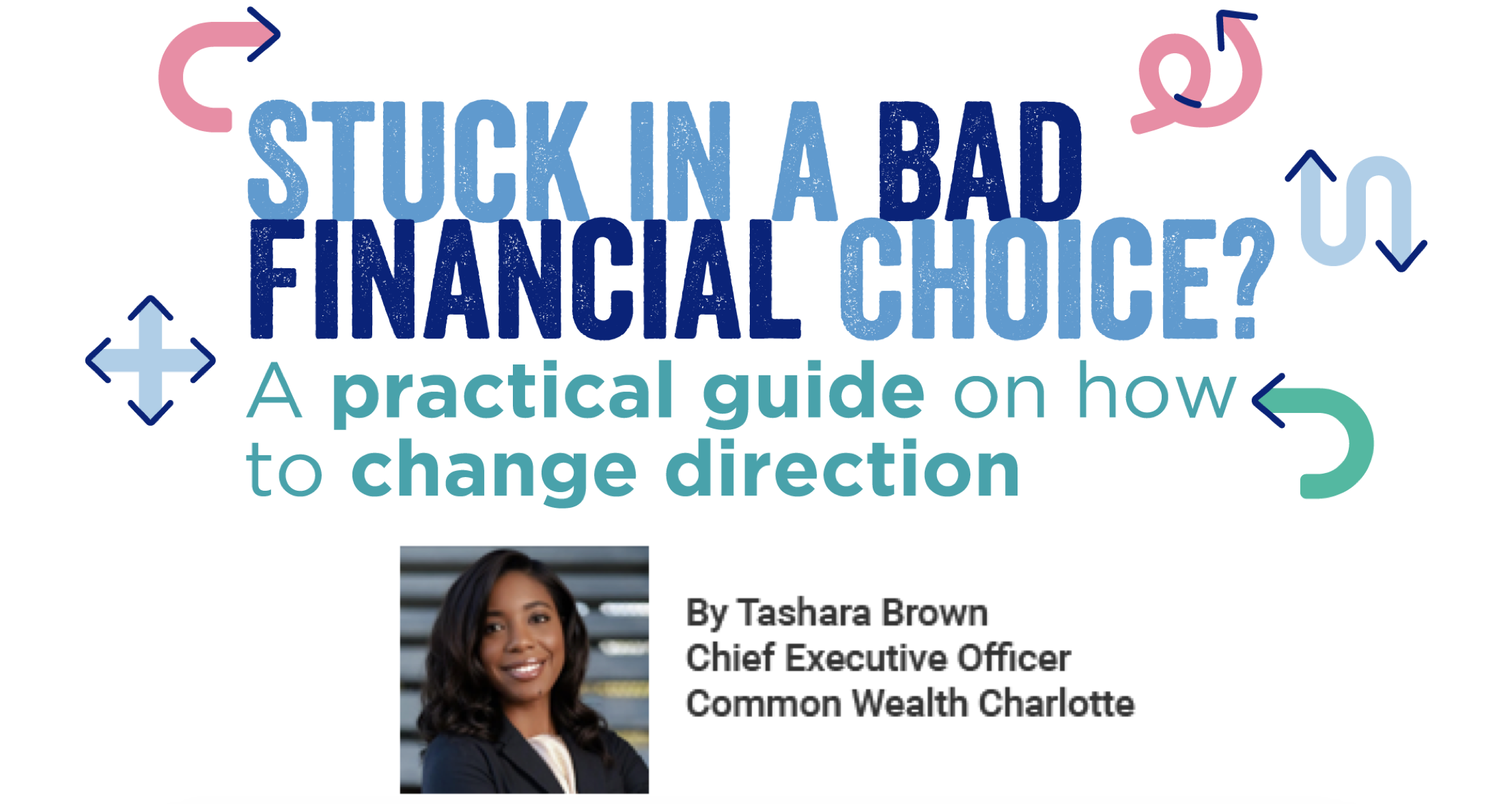
Thank you to NC Treasurer for featuring our CEO in Finance Fridays! Please read the article snippet below:
It is safe to say that we all have been there, made a financial decision that we thought made sense at the time but turned out to be a bad decision. Whether it was a bad investment, a home we cannot truly afford, a car payment that is too high, loaning money to a family member or friend, or credit card debt, the biggest mistake is waiting too long to walk away.
Here is a practical guide on when to determine whether to continue or exit the situation, along with steps to help provide an exit.
Moving forward with a financial decision is smart only if it does not cost you stability, quality of life and upward mobility. It is very important to look at facts, not hope. Truth, not denial. Once you come into a place of clarity and truth, you can make the right decision on how to proceed with the next step. Here are some reasons to reconsider a financial decision:
It cost you your peace. Any financial decision should come with a sense of calm, not constant worry about whether you can keep up with the payments or recover the money.
There is no improvement in the situation. It continues to get worse or you are getting deeper into debt to maintain that decision.
You are transferring debt. You are using other debt (credit cards, loans, etc.) to support that decision. In other words, you are using new debt to support old debt.
Here is one question to ask yourself - “If I knew then what I know now, would I still make the same decision?” If the answer is no, then remaining on that path will only amplify the problem.
Now that we have clarity on where the financial choice lands on the scale of good or bad, here are some practical solutions to help you overcome:
Assess the situation. What is the total amount spent, how much is left, what parties are involved, how is this financial decision affecting you in other areas?
Stop the sunk cost entrapment. The quickest way to fall deeper into the bad decision is to be stuck on what was lost. The sunk cost is money that has already been spent. You want to acknowledge the amount but not stay in a place of dwelling on what was lost. Often, we stay in a bad investment or financial decision because of the amount of money that has been put into it and feel like we have to see it through. In this case we have to come to terms with the loss and accept it.
Pause the damage before fixing it. Depending on the situation you can do one of three things below. By determining the best route to pause the damage it gives you some room for clarity. Often when we are dealing with a bad financial decision and we are not in a clear headspace, it can increase decision making that will gear towards creating more debt. Decisions made in panic can lead to predatory lending or financial decisions that will provide ease in the moment but increase damage in the long run.
Pause payments. Certain lenders offer the option to defer a payment or skip one entirely, with the balance shifted to the end of the loan. These arrangements are typically classified as hardship options.
Stop using the card or the account.
Stop nonessential spending.
Create the exit strategy. There are different exit strategies for different types of debt:
Paydown Exit: This is best when the debt is manageable, but it’s overwhelming. You can call and negotiate lower interest rates, consolidate multiple debt accounts to a lower APR, negotiate a restructured payment plan, negotiate a debt settlement (an amount less than total owed), or use a paydown method (snowball or avalanche).
Liquidation: This is the best option if you have something that is draining your income. You can sell the vehicle, downsize to a smaller home, sell luxury items. Often pride can lend to long-term effects.
Stop Lending money: It is ok to say no. In this case offer support that is not tied to finances or set a fixed amount and do not exceed it. Supporting others should not put you in financial depletion.
Legal Reset (this is a last resort but valid): This is best when debt is unmanageable. This can look like debt settlement or bankruptcy. This is not failure, this is like financial triage.
By determining the best route to pause the damage it gives you some room for clarity. Often when we are dealing with a bad financial decision and we are not in a clear headspace, it can increase decision making that will gear towards creating more debt. Decisions made in panic can lead to predatory lending or financial decisions that will provide ease in the moment but increase damage in the long run.
It is always best to seek a professional financial counselor before finalizing a decision. Based on the debt, some decisions are better than others. Financial counselors can help create a debt management plan.
Now that you have determined and begun the best plan you must Reset, Redirect, and Reflect. An exit without new direction creates the same problem. The goal is not just relief, it’s momentum. Select a stabilizing move that will propel you in a new direction.
You can:
Reduce monthly obligations. Cancel subscriptions, reduce spending in areas that you are able (this is temporary not forever).
Begin to build a savings habit. This can begin as a small amount that grows over time. Consistency turns small wins into major breakthroughs. This is not a race, it’s a marathon.
Recognize the lesson in the matter. Before completely closing the chapter, reflect on what assumptions were wrong, were there warning signs you ignored and what was the emotion that led to the decision. Next, establish a personal rule that will protect you from repeating this financial mistake. This could include setting limits on monthly payments, capping the amount you lend to others, waiting 24-48 hours before making a major purchase, or speaking with a financial counselor. With these in place, it helps protect your future.
Cutting your losses and redirecting in a healthy way is often the moment things start to get better. Exiting a bad financial choice is not quitting, it’s where clarity meets financial health and stability.